Posts

Small Business Saturday - 6 Dec 2014 8th December 2014 11:54 AM
As good a cause as this is, when you get an e-mail like i did this morning saying the rent on my stall is going up by 25% a week from January 1 you realise that Shopping Centres don't give a you-know-what about Independents.That will be me outta here:(
 

25%! Blimey that's a bit extreme. Is there enough of you traders to band together and put pressure on the shopping centre?

Like you say, doesn't exactly follow in the supporting small business sentiment. Maybe get some press coverage or contact the small business saturday bods, or your local paper.

Becoming a standard Christmas Story, retailers that are struggling to fulfil orders before xmas. Marks and Sparks is in the news today as being quoted as saying it will take 10 days for standard delivery versus it's normal 5 days. Apparently blackfriday promotions are part of the blame.

If I remember rightly, last year was full of stories of retailers not being able to deliver to xmas deadlines, and as we all shop online, no doubt things will get worse.

But isn't it down to good organisation, especially for the big boys. Drop shippers are in the hands of their suppliers, but those with warehouses know how much stock they have, and how long it will take to get delivered. You can blame customers for leaving things too late, but people are getting savvy waiting for prices to drop and grabbing bargains.

If a website says a product can be delivered in time for xmas, is it a customer service nightmare and damage limitation exercise if it turns out it actually can't? If it happens on a large scale, I wonder if it could actually impact or damage future sales?

Does anyone offer or promise delivery deadlines? If so, what do you do if you can't meet them? Do you compensate to try and preserve a future customer or for reputation management, or is it a case of tough and not my problem?

I suppose I look at this the wrong way and will moaned at by the eco warriors, but it's definitely the car

The office is 30 minutes away, far enough to wind up and wind down from work mode, but close enough not to have to stress about commuting. It's great thinking time and the morning drive in gives me a chance to plan the day ahead and start the first "to do" list.

Even if there was train station outside my house and the office and it was free, I'd probably still want to use my car, it's private, I'm at one with my thoughts and I'm in control.

No doubt in 50 years time this will be viewed in a University archive, and I'll be used as a classic stereotype of selfish man who polluted the world, in the bad old days of internal combustion and offices. While modern man works from home in a hologram office tut tutting at the bad old days... 

Blogger for Business... 5th December 2014 4:35 PM
And you can be just one post away from virility.”
 

That's what the wife keeps telling me 

Ahh!...Family time! 5th December 2014 2:30 PM

Jan you're scaring me, is this what I've got look forward too with 2 girls 

My first computer had 4Mb of RAM... and a 486, DXII 66 processor. I saved up about £120 for another 4Mb and was landed... Life was good.”
 

Ditto! Upgraded my 486 to 8Mb and felt like a rockstar using a Cray Super computer Used to make my submarine game run lightening fast (after using mem manager obviously).

Downloaded a HP laser printer driver yesterday for Clives lappie, 120Mb. Which then failed after installing.  Worlds gone mad.

But the otherside of the equation, computers may have now got seriously far less efficient and slower per lines of operating system code versus amount of system RAM, but they are a lot cheaper!

PC peak and glory days for me were early to mid naughties. Windows XP, 2003 Server, MS Office 2003 and drivers for the bombproof HP 4050N printer, which after 20 years of sterling corpotrate and then MLS service, now only works on my Win 7 lappie  

After that software seemed to bloat beyond recognition with features I've never needed since 3.11, and still don't need, and Microsoft seemed to have a perverse sense of humour in winding up users by messing around with a perfectly working and familiar interface.

By all means make it faster (hah!) more reliable (really?) but why not give us the ability to be productive out of the box by letting us have the fabulous "classic" settings that you always used to have

Dear santa.....

So what do you think about the revelations about Premier Foods asking it's supply chain to make an "annual investment" payment to remain on their suppliers list, or "pay to stay" 

Apparently Premier Foods, the UK's largest food manufacturer is struggling, so to generate revenue it has hit on the idea of asking everyone in it's supply chain to contribute and in return they will remain a supplier.

This has obviously stirred up a lot of passion and emotion across the news networks, but analysing it coldly from a business perspective, are they doing anything wrong?

A lot of suppliers are reliant on Premier Foods who will be one of their major customers. If Premier Foods are in financial difficulty, then if they don't raise the relevant capital, then they may have to look at other options, maybe selling off products or parts of the business, which could then seriously impact the supply chain, maybe crippling numerous suppliers.

Any supplier can stick up 2 fingers and sell their products elsewhere, after it is a supposed free market economy.

Ethically and morally it stinks, but business can be brutal and everyone knows you should never be reliant on a single revenue stream, when that stops, so does your business.

If Google (don't get any ideas Google) said we need to bill you £xyz annually to utilise our analytics, PPC, adsense and be indexed, I'd moan and bitch, but would pay it.

Or do you think this kind of behaviour should be regulated and a government agency or legislation should intervene? In which case is that the end of a free market economy?

In an ideal world, the suppliers would band together, say no and then increase their prices by 10% and find new customers 

Fail Fast, Fail Often or Play it Safe? 4th December 2014 2:46 PM

The often heard and quoted catch phrase from Silicon Valley is:

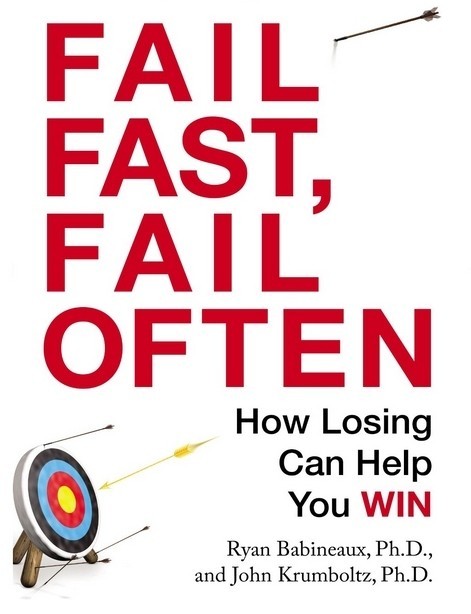
"Fail Fast, Fail Often".

To most British business owners this sounds ridiculous or even defeatist. But we are often portrayed as non risk takers and a people that like to play it safe.

The American argument is fledgling entrepreneurs need to get out there and develop their idea, as one of those ideas will be the next Google. If the idea fails, move on and launch the next one. There seems to be a ready supply of investors who agree with this approach in the hope one of them does turn into the next Google.

Image courtesy of Ryan Babineaux

The UK perception is that you are about to become self employed or a small business owner. I've never met anyone at the numerous networking events over the years that has introduced themselves as an entrepreneur. Our definition is someone who has an established track record of building and running successful companies, and doesn't normally attend networking events!

So 2 extreme sides of the business divide based on common stereotypes.

Is it just a stereotype, or is there any truth to it?

There has been lots of talk in recent years that small businesses are the way forward for the UK economy, and only recently people are starting to question it. Should we focus instead on bigger more established companies?

A lot of small businesses are started not from entrepreneurial vision, but from reality, eg after redundancy and failing to find other work. I'd argue there are a lot of unhappy business owners out there that would relish being an employee again with less responsibility and only soldier on out of necessity.

Other businesses are lifestyle businesses which suit individuals needs, ie give a nice standard of living around flexible working hours fitting in with family life, normally working from home. 

These type of businesses are rarely scalable, so don't generate high taxable revenues, or offer full time employee prospects, training or opportunities.

Those small businesses that do strive to be scalable often struggle with growth due to lack of investment opportunities. A mindset wary of giving away equity or taking on debt or maybe even strategy and direction.

The American model (or perceived) is that gung ho wannbe entrpreneurs site down with an investor and sell them their vision. If the investor is won over, then the new business has access to cash and resources and is encouraged to grow as quickly as possible. Key employees are taken on quickly, with decent cash reserves allowing the selection of decent candidates.

This in turn fuels creativity and growth. If the fledgling business is still viable and the model is working, then more investment can be raised. Releasing equity and even control for investment doesn't seem to be such a concern compared to the UK. This cycle continues for years with companies growing in size and developing new products, waiting to be bought out by a competitor or finally make a profit and then move swiftly to IPO so everyone then get their rewards.

The fail fast fail often banner makes the process sound reckless and uncontrolled, but it's a headline. I suspect the reality is a little different. Failing means losing money, either yours and/or your investors. So I doubt an investor is going to be overly impressed with your track record of losing peoples money. Likewise anyone approaching an investor needs to have more than passion, they will need a viable business plan and model.

So is there a half way house? 

Are there elements we can learn from America relating to risk? Do we need to push ourselves more? Should we be looking for more aggressive style start ups that have access to funding, with business owners content to give away large chunks of equity or ownership?

Would this model work in the UK? There are pockets of tech startups scattered around the UK that use this model, but could we drive it further? Maybe allocate a big investment pot of cash from the govt to drive and fuel start ups in the hope of fostering the next Google or BAE?

The eventual payback from a few successful companies going public should ensure a healthy return for the tax payer, act as a job creation magnet, create pools of specialist talent and keep them in the UK rather than heading to the States.

Can we change?

We have such an incredible history of innovation and invention, but then look at how many large businesses have folded or sold to overseas corporations. Losing Landrover to Tata was the final straw for me, even worse, look at the spectacular success Tata have made of it  Why couldn't we do that?

Is playing it safe and small locked into our business DNA or is there hope for the future?

Will university graduates start leaving pumped full of ambition and determination, but given access to funding and advice to turn it into reality?

Or will they be told to go to work first and get experience? Then have the passion beaten out of them in corporate politics.

I think the UK has to undergo a massive mindset, from benefit culture to how we view success. 

Only then can we start to grow again as a major economy. At least in my humble opinion 

Anyone else got any thoughts?

Ok, after a bung fight in the office I'll concede defeat... it was a 1.5 metre skeleton 

Blimey thats a long debt..... 4th December 2014 1:27 PM
Blimey that's a long debt and what I don't understand is who we owe the money to?
 

This is a follow on announcement from October when he pledged to pay off some of the debt.

Napoleonic, Crimean and First World War Debt to be paid

I assume it will be the same format, so beneficiaries will be the owners of war bonds, which have passed down through the family. Check the attic for any paperwork!